
At what point should you move part of your retirement into safety?

Have you ever typed that question into a search bar late at night — not because you were being responsible, but because something quiet in the back of your mind wouldn’t let you rest?
If you have, you already know what comes back.
Articles. Calculators. Percentages. Rules with names attached to them, offered with great confidence by people who have never met you. And somehow, after reading all of it, the question still sits there just as heavy as it was before you started.
The truth is more subtle than most of the advice out there.
It comes down to one thing: how much can you actually afford to lose?
Not the kind of drop a younger investor can sit through and wait out. The kind of loss that happens while you are pulling money from the account. The kind that does permanent damage before the market finds its way back.
That distinction matters more than most people realize.

There is a version of this conversation that stays mathematical. Allocation models. Withdrawal rate studies. Safe harbor percentages. Those things have their place.
But what most people are really asking — the thing underneath the question — is not about percentages at all.
Do you ever wonder whether you’ve protected enough of what you’ve built?
Whether the plan you have is actually built for the life you’re heading into — not just the life that looked right on paper five years ago?
Whether a bad year in the market, hitting at exactly the wrong moment, could change things in ways that are hard to come back from?
That quiet worry is real. And it deserves more than a formula.
Here is what the numbers actually show.
Two people both starting with one million dollars experience the same severe crash — something close to 2008. A thirty-five percent drop in the first year. A slow, real recovery over the following nine.
The difference between them is one thing: one is drawing income from the portfolio. The other is not.
The forty-year-old takes no withdrawals. The crash hurts — the portfolio falls from a million to six hundred and fifty thousand in year one. But because nothing is being taken out, the recovery has room to work. By year ten, the portfolio has grown past where it started. Roughly $1,226,000. The market did what markets historically tend to do. It came back and patience was rewarded.
The sixty-five-year-old retiree faces the same crash. The same recovery. But forty thousand dollars is being withdrawn every single year — starting from the moment the market drops. In year one, the portfolio doesn’t just fall thirty-five percent. It falls, and then forty thousand dollars gets pulled from the wreckage. And every year after that, withdrawals continue — pulling from a portfolio that is still trying to heal. By year ten, despite a genuine recovery in the market, the portfolio sits at roughly $681,000.
It never got back to where it started.
Not because the market failed but because the withdrawals made full recovery mathematically impossible.
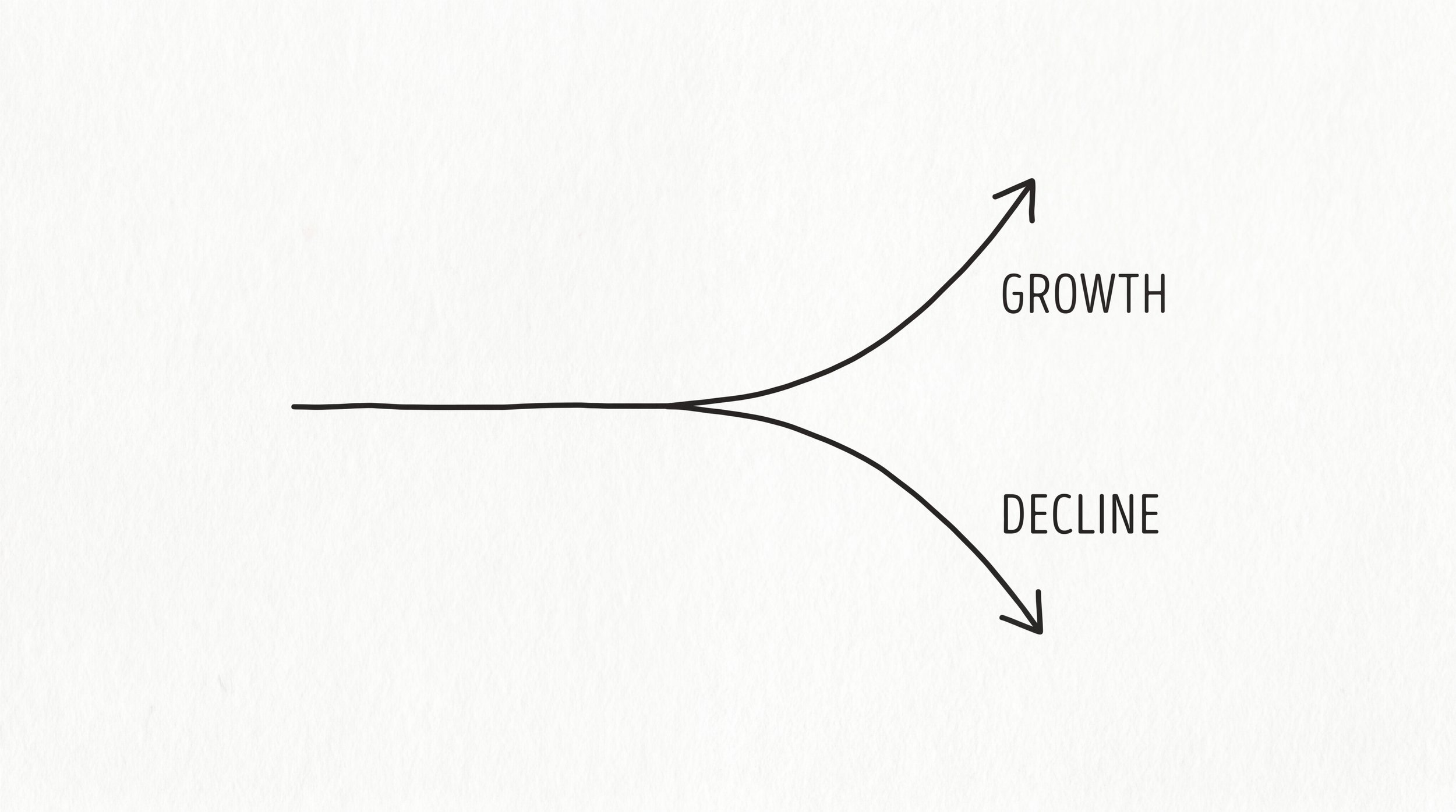
That gap — the difference between $1,226,000 and $681,000 — is what sequence of returns risk actually looks like in real life.
The market recovered.
The retiree’s portfolio did not.
And that is the part of retirement planning that almost never gets explained clearly enough.
There is a version of risk that younger investors face — volatility, uncertainty, and the anxiety of watching a number go down. But they have something that makes all of it survivable. Time and the ability to wait.
Retirement changes the math completely. Once you start withdrawing from a portfolio that is losing value, you are not just losing what the market takes. You are selling assets at their lowest prices to cover your living expenses. Those shares don’t come back. The recovery happens without them.
This is why the question “how much should be protected?” is not really a conservative investor question. It is a retirement math question. It is about which portion of your money has a job to do right now — and which portion needs to be sheltered from the worst possible timing.
There is no single percentage that works for everyone.
But if you are within a few years of retirement, or already in it, the money you intend to draw from in the near term deserves a different kind of protection than the money you won’t touch for a decade. Because we cannot always predict when markets recover. History tends to be on the side of patience. But history cannot tell you whether this particular downturn resolves in two years or six — and if you need that income in the meantime, the timing is not something you get to choose.
The people I have seen weather difficult markets in retirement are not the ones who had the most sophisticated strategies. They are the ones who had enough stability underneath them that they never had to panic. They could look at a difficult year and breathe through it — because the part of their life that needed protecting had been strategically arranged.
That is the real goal, when you get right down to it.
Not the highest number possible with uncertain probabilities.
A number you can actually live on steadily, and with peace of mind.
We don’t have to be gamblers to recognize this feeling.
Picture a good night on the casino floor. The kind where things are going your way and the room feels like it’s moving in your direction. And somewhere in the middle of it all, the mind starts producing the most perfectly reasonable thoughts.
“I think I finally understand how this works. I can’t seem to lose tonight. Maybe just a little longer.”
It feels logical. It feels earned.
And if you stay long enough — eventually, eventually — you already know what happens.
The stock market is not a casino. That comparison would be unfair, and it would be wrong. Historically, markets have moved upward over long periods of time. Investing is not a gamble the same as roulette.
But the feeling of a rising portfolio, watching your numbers grow, and beginning to believe that the future is finally cooperating — can quietly start to behave like that. Risk starts to feel like it has disappeared. Uncertainty starts to feel solved. Things feel safe.
And that is precisely the moment worth pausing in.
Have you ever noticed that the people who came through difficult markets the best were not always the ones with the most sophisticated strategies? Sometimes they were simply the ones who had someone steady beside them. Someone who had seen the floor before.
Someone who could look at them calmly and say, with quiet certainty:
“You did good. Let’s call it a night.”
That is not pessimism or fear dressed up as wisdom.
That is the kind of care that only comes from someone who is thinking about your morning — not just the next hand.
Review Your Retirement Plan
Would your retirement plan hold up in a bad first year?
If retirement is getting closer, we can help you look at your income needs, withdrawals and how much stability you may want around the money you will rely on first.
No obligation. General planning conversation only — not personalized financial, legal or tax advice.
